

By Vivian Emoni
From the 1960s through the 1980s, Nigeria’s industrial sector showed strong promise.
Factories flourished, producing textiles, cement, beverages, processed foods, tyres, chemicals, automobiles, and other consumer goods.
However, decades of policy inconsistencies, inadequate infrastructure, unreliable electricity, foreign exchange challenges and weak financing have undermined the sector.
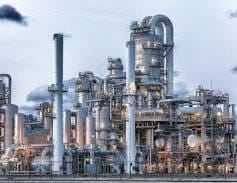
Today, many factories have closed, reduced production or relocated, raising concerns about Nigeria’s capacity to rebuild a competitive manufacturing base.
At independence in 1960, agriculture dominated Nigeria’s economy, providing food, raw materials, employment and foreign exchange.
Industrialisation was still at an early stage, but manufacturing gradually expanded into agro-processing, textiles, beverages, cement and consumer goods.
During the 1960s and 1970s, foreign investors contributed capital, technology and technical expertise to Nigeria’s emerging industrial sector.
The Federal Government also adopted import-substitution industrialisation to encourage local production and reduce dependence on imported goods.
The strategy was designed to create employment, develop local industries and strengthen domestic productive capacity.
The 1970s represented one of Nigeria’s more promising periods of industrial development. Following the civil war, the economy expanded rapidly, supported largely by rising oil revenues and increased government spending.
Factories producing textiles, cement, beverages, processed foods, tyres, vehicles and chemicals became important components of the economy.
The oil boom provided the government with resources for infrastructure, industries and other development projects.
However, the growing dependence on oil gradually weakened incentives to diversify the economy.
Many factories also relied heavily on imported machinery, spare parts, technology and raw materials.
Consequently, Nigeria’s industrial growth lacked the strong domestic supply chains required for sustainable expansion.
The industrial decline became more pronounced in the early 1980s following the fall in international oil prices.
Lower oil revenues reduced government income and foreign exchange availability, making it difficult for manufacturers to import essential inputs.
Available data indicates that manufacturing capacity utilisation, which had exceeded 70 per cent during much of 1975 to 1981, fell sharply in the following years.
The situation forced many factories to reduce production, lay off workers or shut down completely.
For industries dependent on imported raw materials, foreign exchange shortages became a major threat to survival. In 1986, Nigeria introduced the Structural Adjustment Programme to address economic imbalances and stimulate production.
The programme introduced major changes in exchange rates, trade, foreign exchange allocation and economic management.
However, manufacturers faced higher production costs, foreign exchange difficulties and increased competition from imported products.
Shortages of raw materials and spare parts, obsolete technology, inflation and inconsistent policies further weakened manufacturing.
Employment in Nigeria’s textile and garment sector reportedly fell from about 700,000 workers in 1980 to 40,000 by 1995.
Industry experts say the decline demonstrated the vulnerability of industries that lacked adequate infrastructure, financing, technology and consistent government support.
Prof. Adesoji Adesugba, President-Elect of the Abuja Chamber of Commerce and Industry (ACCI), said that Nigeria could revive viable moribund state-owned enterprises by enforcing corporate governance, engaging competent investors and separating commercial management from political interference.
Adesugba, also the National Vice President of Nigerian Association of Chambers of Commerce, Industry, Mines and Agriculture (NACCIM), said that revival should begin with a candid assessment of why each enterprise collapsed, rather than immediate capital injection.
He said the government should classify enterprises into viable strategic firms for reform, commercially dead firms for liquidation or sale, and those better managed by the private sector.
According to him, hard budget constraints and genuine corporate governance are critical and boards should comprise competent professionals and operate with clear performance targets.
“Boards must be reconstituted on the basis of demonstrable expertise, insulated from political interference, and held to transparent key performance indicators,” he said.
Adesugba said professional managers must also be empowered to make commercial decisions, while the government should settle inherited debts, pensions and staff liabilities before restructuring or transferring enterprises.
He described Public-Private Partnerships, (PPPs) concessions and mixed-ownership arrangements as effective tools for providing capital, technology, managerial expertise and market networks to struggling state-owned enterprises.
The development economist and investment promotion expert cited Nigeria’s telecommunications reforms as evidence that private investment could transform a moribund enterprise, contrasting the success of telecoms liberalisation with continuing challenges in the power sector.
He also advised Nigeria to learn from Singapore’s Temasek model, Malaysia’s GLC reforms and China’s mixed-ownership approach, while adapting their principles to local institutional realities.
Dr Chinedu Amadi, President, Organisation of Youth in International Trade and Commerce (OY-ITC), an NGO, said that Nigeria’s industrial decline could be attributed to a single factor.
Amadi said that it resulted from several interconnected challenges that increased production costs and weakened the competitiveness of local manufacturers.
According to him, electricity remains one of the biggest challenges confronting Nigerian manufacturers as many factories depend on diesel and petrol generators, increasing production costs and reducing their ability to compete with foreign manufacturers.
“Bad roads, inadequate rail connections, inefficient ports and weak logistics, increase the cost of transporting raw materials and finished products.
“These challenges make Nigerian goods more expensive and reduce their competitiveness in domestic and international markets.
“Nigeria can as well learn several important lessons from China and other successful industrial economies such as South Korea, Germany and Japan.
“Industrialisation does not happen through government policies alone; it requires consistent policies, infrastructure, skills, finance and a strong partnership between government and the private sector.
“China and other industrial economies invested heavily in reliable power and industrial infrastructure. Nigeria’s inadequate and expensive electricity remains one of the major constraints on manufacturing,’’ he said.
In addition, Mr Agabaidu Jideani, the Director-General of the Abuja Chamber of Commerce and Industry (ACCI), said reviving Nigeria’s moribund state-owned enterprises required treating them as commercial assets rather than government establishments.
Jideani said the government should begin with a comprehensive audit and classification of the enterprises to determine their financial status, assets, liabilities, infrastructure, market potential and causes of failure.
According to him, not all moribund enterprises should necessarily be revived, the government must identify those that are strategically important and commercially viable, while restructuring, repurposing or disposing of others.
He said viable enterprises should undergo recapitalisation, debt restructuring, infrastructure rehabilitation and technology upgrades, supported by professional management and competent boards appointed on merit rather than political considerations.
The ACCI director-general identified unreliable electricity, poor infrastructure, multiple taxation, foreign exchange challenges, regulatory bottlenecks and limited access to finance as major constraints that must be addressed to sustain the revival.
He said PPPs could provide an effective avenue for reviving viable state-owned enterprises, particularly where the government lacks the capital, technology and managerial expertise required.
Jideani said the government and the private sector should work as partners, with the government providing policy, regulatory and infrastructure support, while private investors contribute capital, technology, management expertise and market access.
He stressed that collaboration should also involve financial institutions, development finance institutions, organised private-sector groups, labour, host communities, universities, research institutions and technical experts.
Drawing lessons from China, Singapore, South Korea, and other Asian economies, he said Nigeria must partner strongly with international firms. He added that the country needs consistent industrial policies, effective institutions, infrastructure, human capital, technology transfer, local value addition, and access to long-term finance.
He said the ultimate objective should be to transform moribund enterprises into productive assets that create jobs, strengthen local value chains, contribute to economic growth and compete effectively in regional and global markets.
Sharing similar sentiments, Mr Williams Osaze, President of Society for the Promotion of People’s Right, an NGO, said that Nigeria needed a comprehensive industrial strategy that addresses conditions required for factories to operate profitably.
Osaze noted that reviving Nigeria’s industrial sector required more than reopening abandoned factories, noting that industrial activities helped establish commercial and manufacturing centres around Lagos, Kano, Kaduna, Aba, Onitsha, Nnewi and Port Harcourt.
“However, the sector remains below its potential because industrialisation is not sufficiently supported by reliable infrastructure and strong domestic value chains.
“Therefore, Nigeria’s industrial history should not be viewed simply as a story of factories that once flourished and later disappeared. Rather, it is a story of an industrial base that showed promise but was never sufficiently consolidated.
“Affordable and reliable electricity should be central to Nigeria’s industrial revival. Government should strengthen generation, transmission and distribution while supporting renewable energy and dedicated power solutions for industrial clusters,’’ he said.
Also, Alhaji Magaji Yusuf, an economist expert, urged the government and development finance institutions to provide affordable financing targeted at productive investment.
Yusuf said that not every moribund factory should simply be reopened, adding that the government should assess each facility to determine its economic viability, technological condition, investment potential and possible alternative uses.
“My view is that some factories may require rehabilitation, while others may need restructuring, private investment or complete replacement,” he said.
Policy analysts hold that to revive Nigeria’s industrial sector, the government and private sector must address lingering power shortages, provide single-digit interest-rate financing, upgrade transport infrastructure, and ensure strict implementation of the National Industrial Policy.(NANFeatures)
Leave a Reply