

By Emmanuel Oloniruha
Bauchi
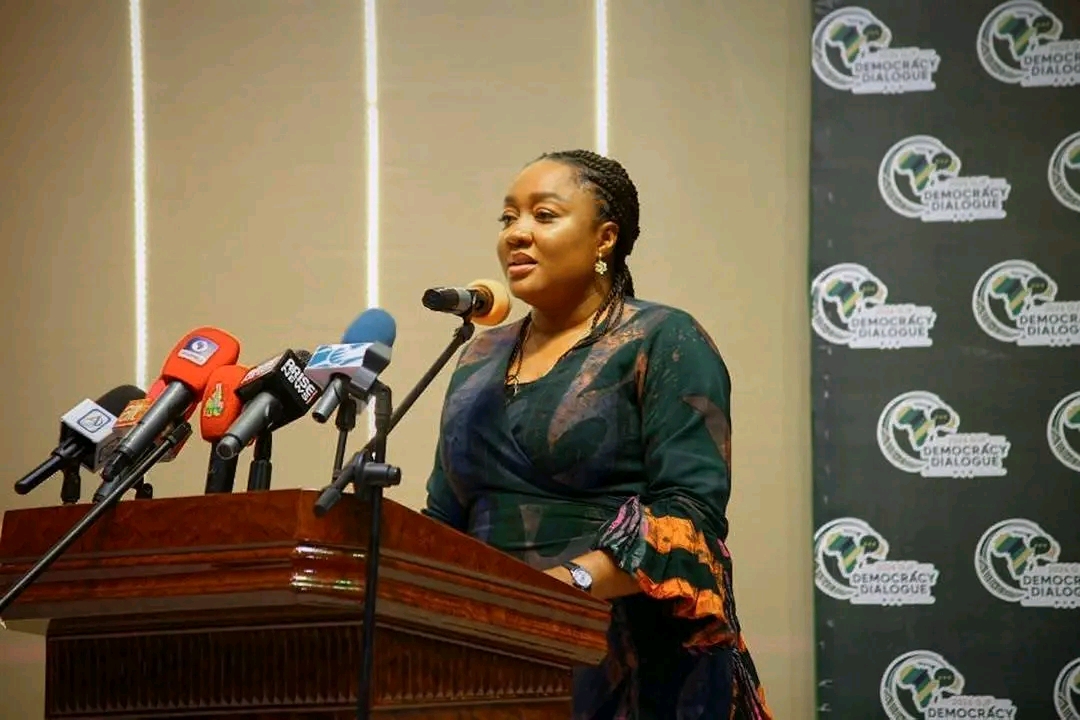
The Goodluck Jonathan Foundation (GJF) says the survival of democracy in Africa depends not only on elections but also on the resilience of institutions that safeguard democratic values between electoral cycles.
The Executive Director of GJF, Ms Ann Iyonu, said this on Tuesday in Bauchi at the 2026 GJF Democracy Dialogue.
The dialogue had the theme: “Beyond Elections: Can Political Parties and the Judiciary Alone Save African Democracy?”
Iyonu said while elections remained the most visible expression of democracy, they were insufficient to guarantee freedom, fairness, accountability and sustainable governance.
“Democracy has too often been reduced to the ritual of elections, while the deeper institutions and culture that sustain it remain fragile.
“Elections alone cannot guarantee freedom, fairness or accountability; it is the institutions between elections that safeguard democratic promises.
“Among these institutions, political parties and the judiciary occupy a central place,” Iyonu said.
She expressed concern that political parties across Africa often emerged around personalities rather than ideas, with political mobilisation based on ethnic or regional identities rather than national vision.
According to her, such structures turn politics into a zero-sum game and reduce governance to permanent campaign cycles and patronage.
“The very institutions entrusted with organising political competition and governance have too often become vehicles for electoral victories rather than engines of democratic consolidation,” she said.
Iyonu called for stronger political parties and judiciaries capable of performing their roles beyond electoral periods.
She said courts across Africa faced challenges including political interference, delayed justice and declining public trust, in spite of their role as the last line of defence for democratic rule.
Iyonu challenged political party leaders and judicial officers to examine whether they were fulfilling their responsibilities as incubators of leadership, drivers of policy innovation and guardians of constitutionalism.
She said political parties, which should serve as bridges between citizens and the state, had increasingly narrowed their role to electoral competition.
“Political parties remain among the least trusted institutions across Africa. Yet, if they fail, democracy itself falters,” she said.
Iyonu said the dialogue had three primary objectives, including assessing the effectiveness of political parties and the judiciary in advancing democratic stability.
She said it would also explore ways to strengthen democratic culture through policy formulation and constitutional integrity, as well as identify actionable reforms.
She urged participants to make the dialogue a collective call to renew African institutions, restore the social contract and strengthen democratic governance.
Iyonu recalled the words of the late Prime Minister, Sir Abubakar Tafawa Balewa, that Africa’s future depended not on the strength of individuals but on the strength of its institutions.
She said the dialogue should therefore go beyond discussions to generate concrete actions for strengthening democratic institutions across the continent.
“For the survival of democracy on our continent rests not only on the conduct of elections but on the resilience of institutions, such as political parties and the judiciary, that safeguard democratic values between electoral cycles,” she said.
Leave a Reply